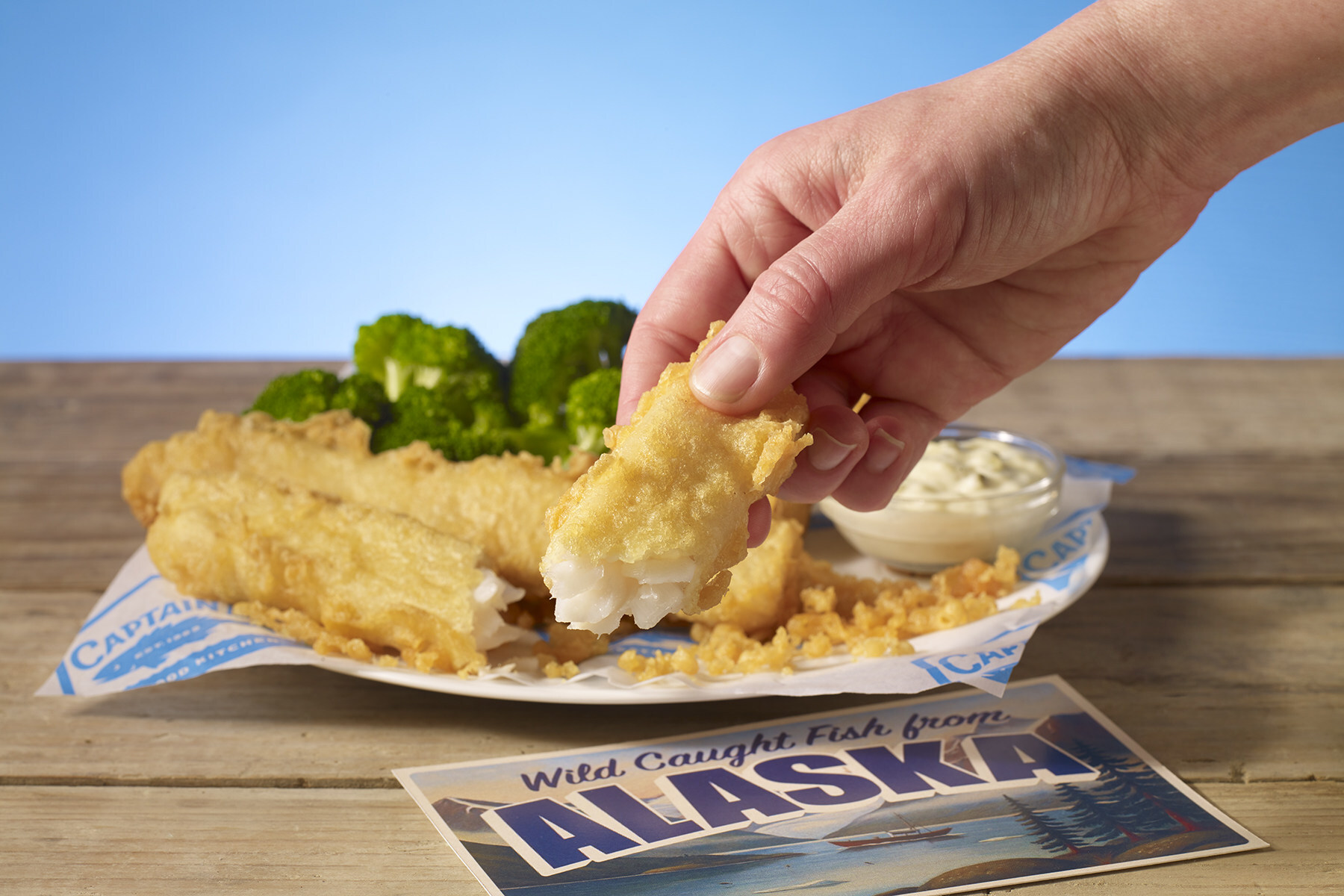
Captain D's, the Nashville-based fast-casual seafood chain, launched a systemwide conversion to wild-caught, batter-dipped fish sourced from Alaskan waters on June 1, 2026 — a supply-chain pivot the company frames as a commitment to domestic, responsibly harvested product at a value price point.
The company did not disclose annual volume commitments, ex-vessel value, or the specific species involved in the rollout, though Alaskan wild-caught whitefish at this scale typically draws from pollock or Pacific cod fisheries — both among the highest-volume, most scrutinized groundfish stocks in North American commercial harvest. Alaska pollock alone accounts for roughly 3 billion pounds of annual U.S. harvest, making it the backbone of the domestic value-added whitefish supply chain.
The move aligns Captain D's with broader quick-service and fast-casual operators that have increasingly leaned on Alaskan and domestic-sourcing claims to differentiate from competitors relying on imported, farm-raised tilapia or pangasius. Alaska pollock and Pacific cod carry strong sustainability credentials — both fisheries hold Marine Stewardship Council certification and are managed under NOAA Fisheries quota frameworks that have kept stock assessments stable in recent cycles. For a chain operating several hundred domestic units, locking in Alaskan wild-caught supply also hedges against the import price volatility that has pressured operators sourcing head-off whitefish blocks from China or Vietnam.
From a supply-chain standpoint, the conversion to a batter-dipped, value-added format — likely IQF portions processed to a finished breaded or battered spec — suggests Captain D's is working with a co-manufacturer or primary processor rather than sourcing whole or headed-and-gutted fish directly from harvesters. That adds traceability complexity but insulates the chain from dockside price swings at Alaskan offload ports. Dockside prices for Alaska pollock have ranged from roughly $0.20 to $0.35 per pound in recent seasons depending on roe content and delivery form, with value-added battered portions trading at a significant premium further down the supply chain.
Captain D's has not indicated whether it is pursuing third-party sustainability verification such as MSC chain-of-custody certification or Best Aquaculture Practices (BAP) labeling for the new product, a gap that may draw scrutiny from procurement-focused retail and foodservice buyers benchmarking against competitors. The chain's positioning as a fast-casual seafood specialist — rather than a full-service or retail operator — gives it some latitude on certification overhead, but consumer-facing "responsibly sourced" language without a certifying body behind it is increasingly a flashpoint in seafood marketing. Industry observers tracking fast-casual seafood operator strategy will note this launch as a meaningful signal of where mid-tier chains are placing sourcing bets heading into 2027 procurement cycles. For more on domestic whitefish supply dynamics, see recent coverage of Alaskan groundfish quota and harvest trends.
Written by Michael Politz, Author of Guide to Restaurant Success: The Proven Process for Starting Any Restaurant Business From Scratch to Success (ISBN: 978-1-119-66896-1), Founder of Food & Beverage Magazine, the leading online magazine and resource in the industry. Designer of the Bluetooth logo and recognized in Entrepreneur Magazine's "Top 40 Under 40" for founding American Wholesale Floral, Politz is also the Co-founder of the Proof Awards and the CPG Awards and a partner in numerous consumer brands across the food and beverage sector.